

Engineered water repellency in soils, often overshadowed by more conventional topics in geotechnical engineering, has recently emerged as a pivotal area of research with significant practical implications. This phenomenon, characterized by inducing soil’s resistance to wetting and water infiltration, can have profound impacts on everything from agriculture to urban planning and infrastructure development. Understanding the mechanisms behind Engineered water repellency (EWR) and harnessing its potential can lead to innovative solutions to age-old problems in geotechnical engineering.
The Science Behind Engineered Water Repellency
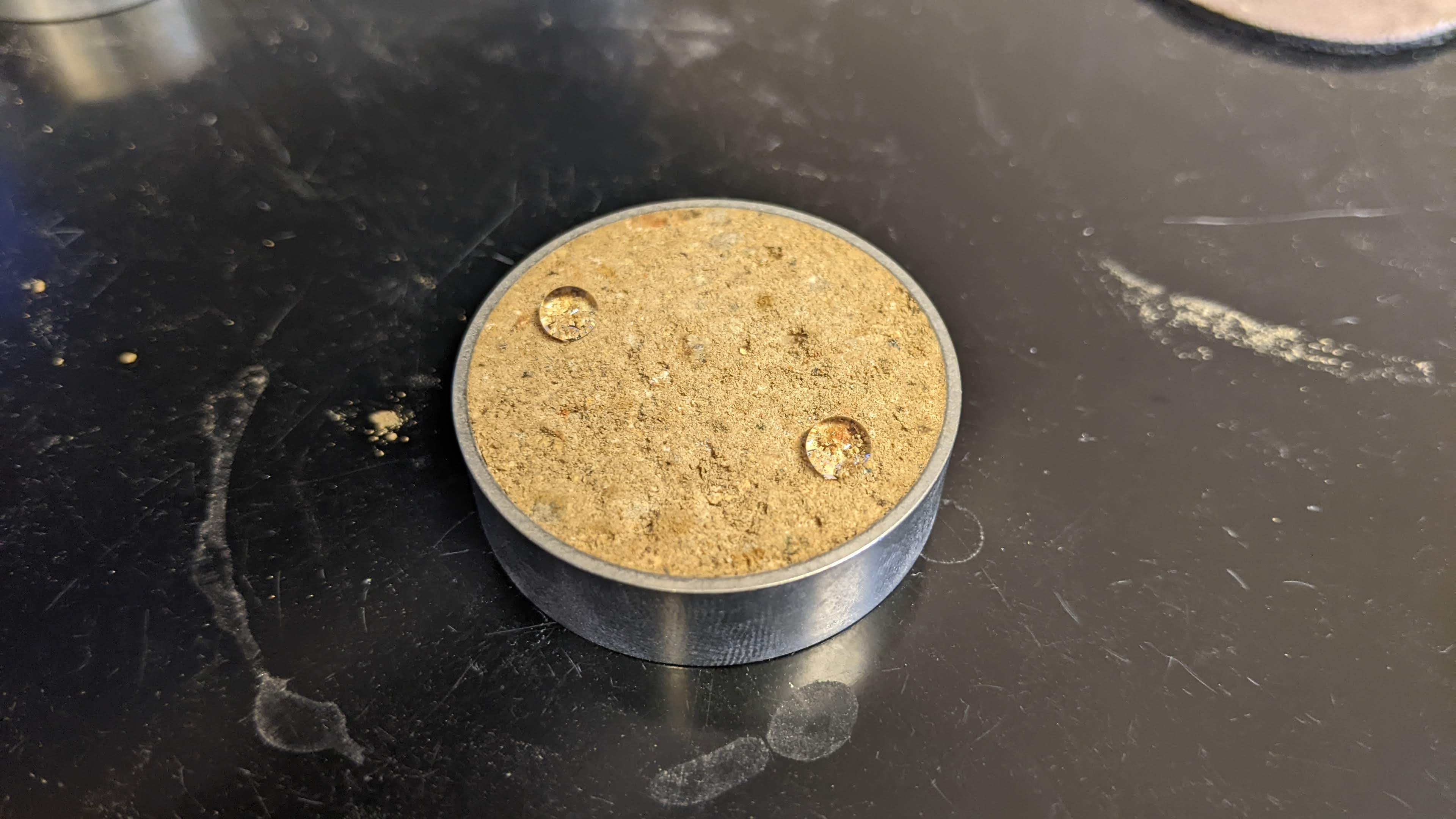
At its core, soil water repellency is caused by the presence of hydrophobic organic compounds coating soil particles. These compounds, originating from plant residues, microbial activity, or even pollution, alter the way water interacts with the soil matrix. While natural and anthropogenic causes abound, water repellency can be induced in soils by various methods – surface modification, coating or the inclusion of water repellent nano-paritcles. The result of treatment is pracitcally seen its hydraulic behavior. Rather than infiltrating easily, water tends to form beads and run off, similar to how water behaves on a wax-coated car hood.
Implications for Geotechnical Engineering
The presence of water-repellent soils poses both challenges and opportunities for geotechnical engineering. On one hand, it can exacerbate erosion, reduce soil stability, and hinder the growth of vegetation by affecting soil moisture dynamics. On the other hand, understanding and manipulating EWR offers new avenues for engineering applications.
Erosion Control and Slope Stability: By managing the hydrophobic characteristics of surface soils, engineers can design landscapes that minimize erosion and enhance slope stability. Applying hydrophobic treatments to the surface can direct water flow, reduce surface runoff, and thereby decrease erosion risks in vulnerable areas.
Water Conservation and Management: In arid and semi-arid regions, leveraging soil water repellency can help in capturing and directing water flow to targeted areas for groundwater recharge or irrigation purposes. This controlled approach to water management can optimize water use and conservation strategies.
Foundation Engineering: Understanding the water-repellent properties of soils is crucial for designing foundations in areas prone to fluctuating moisture levels. By adjusting the water repellency of soils around foundations, engineers can mitigate the risks associated with soil expansion and contraction, which can lead to structural damage.
Innovative Construction Materials: Research into EWR has led to the development of innovative construction materials with built-in water repellency. These materials can provide enhanced protection against moisture for underground structures, improve the longevity of construction materials, and reduce maintenance needs.
Expanding Horizons
The expanding applications of engineered water repellency in geotechnical engineering represent a fusion of traditional engineering principles with innovative approaches to managing the earth’s most vital resource: water. As research continues to uncover the nuances of EWR and its impact on soil behavior, the potential for groundbreaking applications in construction, water management, and environmental protection grows.
At the Uduebor Lab, we are commiting to diving deeper into this fascinating topic, unlocking new potentials for the future of geotechnical engineering, ensuring resilience and efficiency in an ever-changing environment.
 Uduebor Lab
Leave a comment