
Research
Our research focuses on expanding the applications of Engineered Water Repellency and incorporating other innovative solutions for engineering a more sustainable and resilient world.
Eric Anderson
Colton Boswell
EWR for Infrastructure Resilience – SWFL
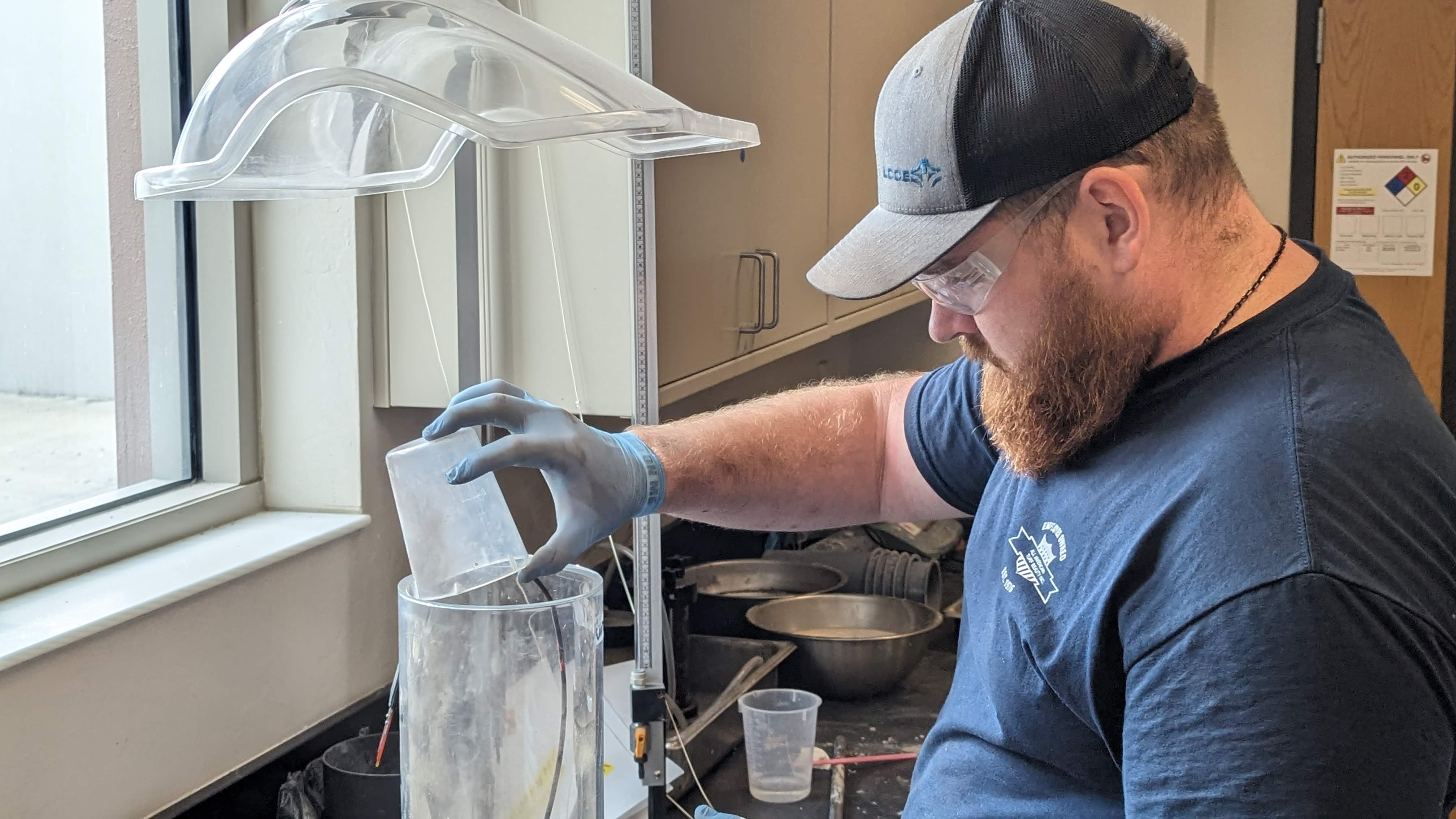
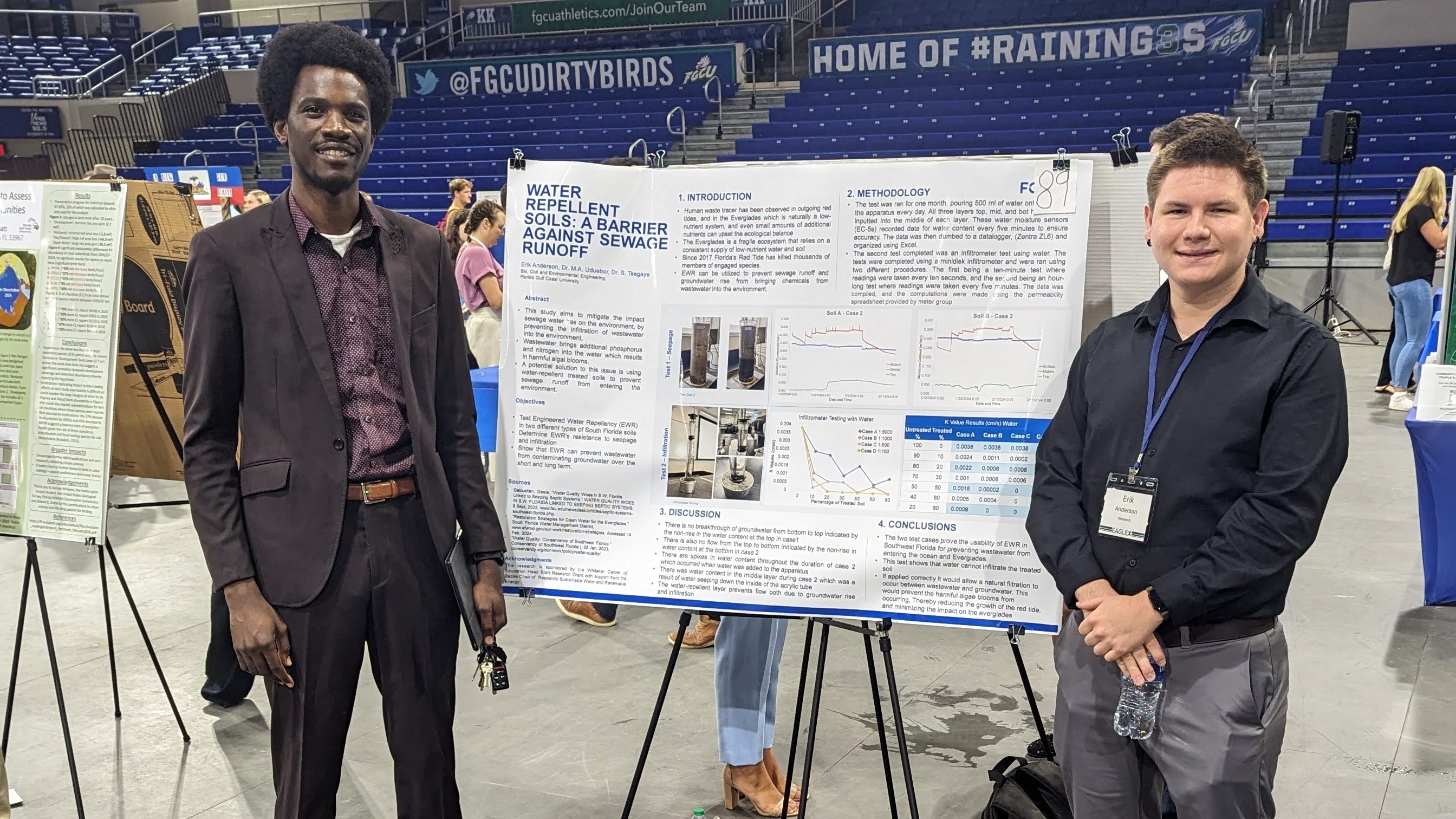
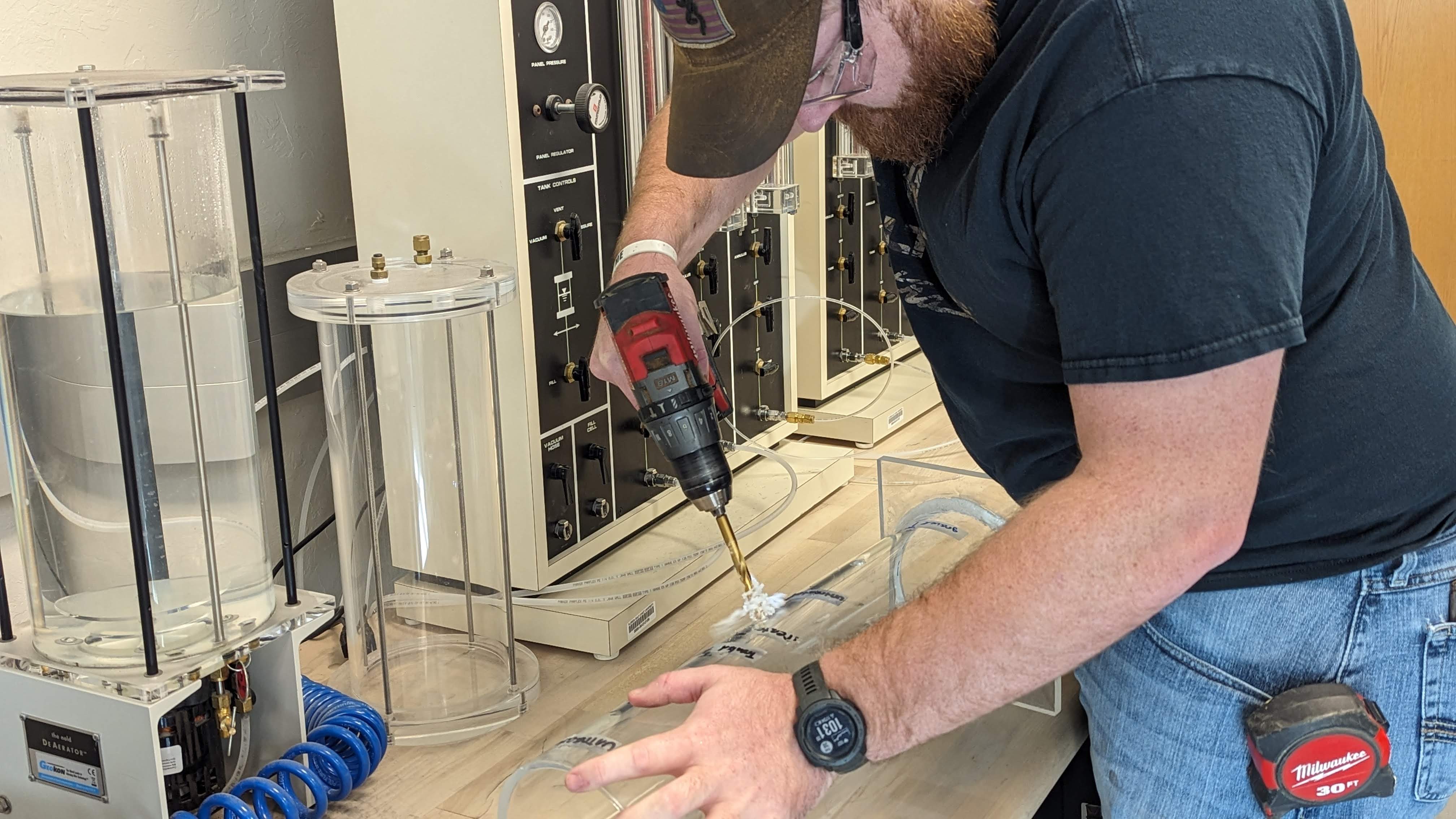
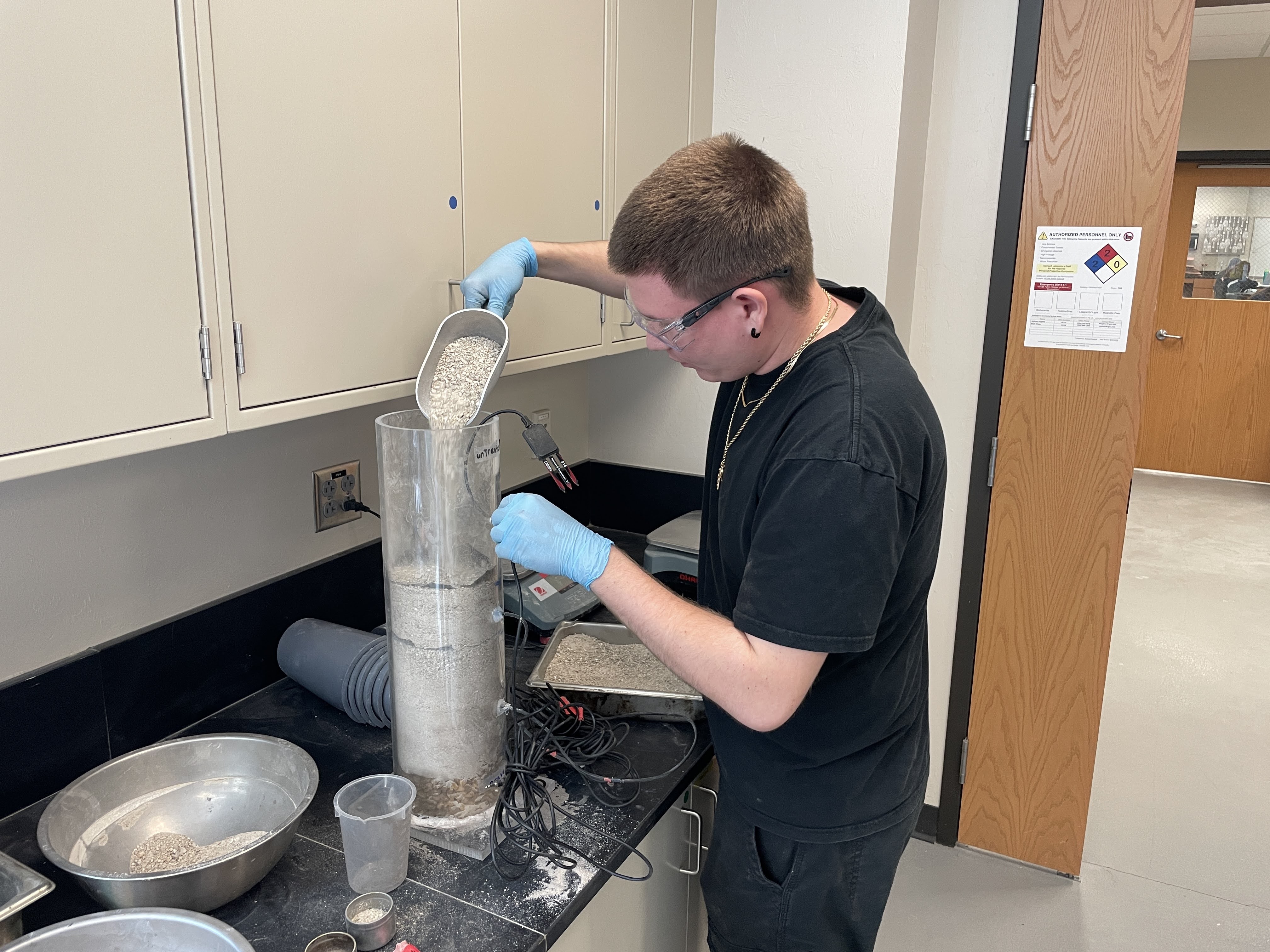
Engineered Water Repellency (EWR) plays a crucial role in enhancing the resilience of infrastructure in Southwest Florida, particularly in managing moisture control for sewage and pavement applications. By integrating EWR technology, these infrastructures can effectively mitigate the detrimental effects of moisture, such as corrosion and structural deterioration. In the context of sewage systems, EWR application helps to minimize contaminant infiltration, reducing the strain on the delicate ecosystem (Everglades). Similarly, for pavements, EWR serves as a protective barrier, ensuring longevity and reducing maintenance requirements amidst Florida’s challenging climate conditions. This innovative approach not only promotes the durability of infrastructure but also contributes to the overall sustainability of the region.
Grants/Support – WCE Head Start Grant, Backe Chair Fund, Whitaker Center Mini-Grant Fund, WiSER
Co-Advisor(s) – Dr. S. Tsegaye
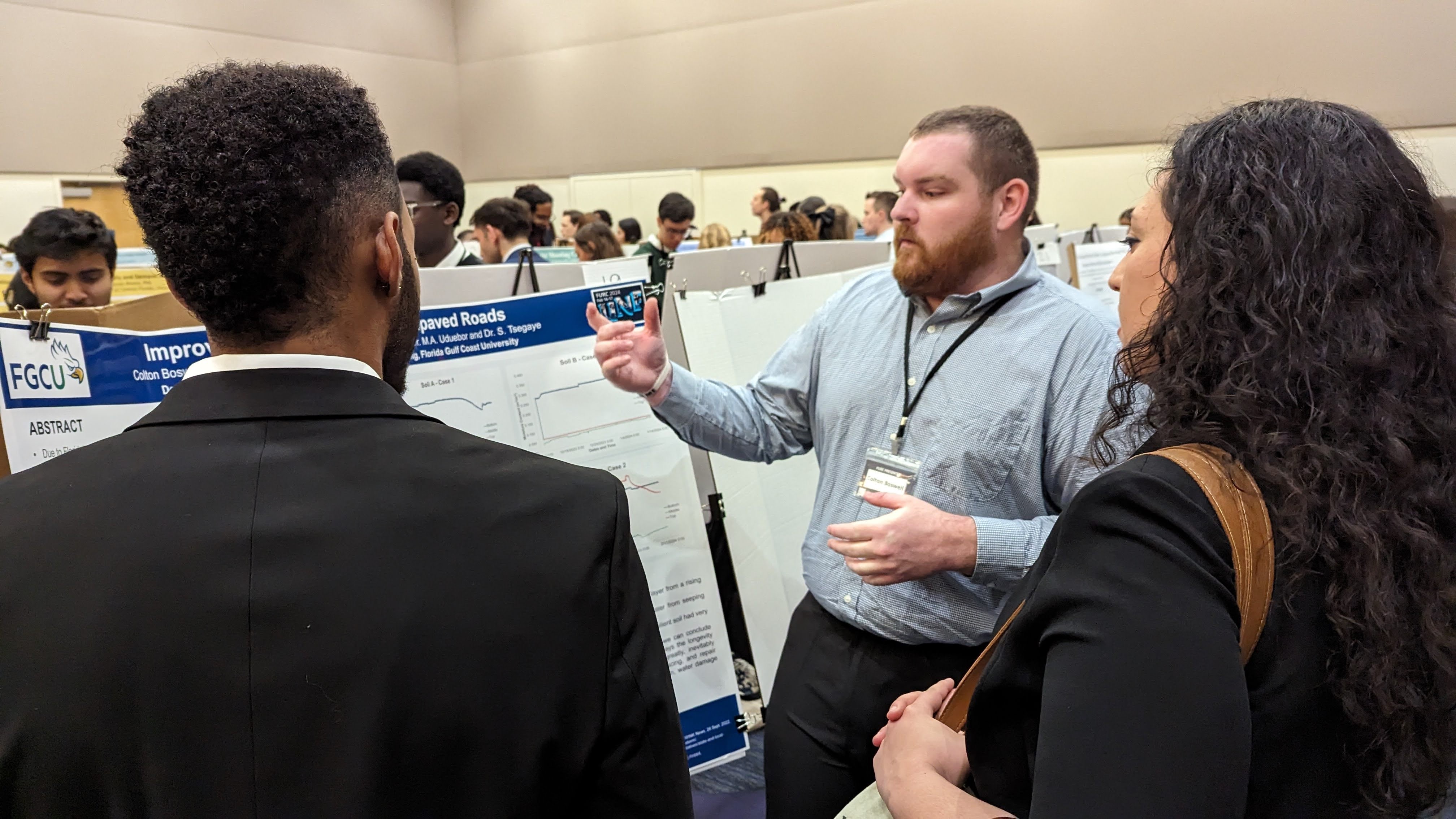
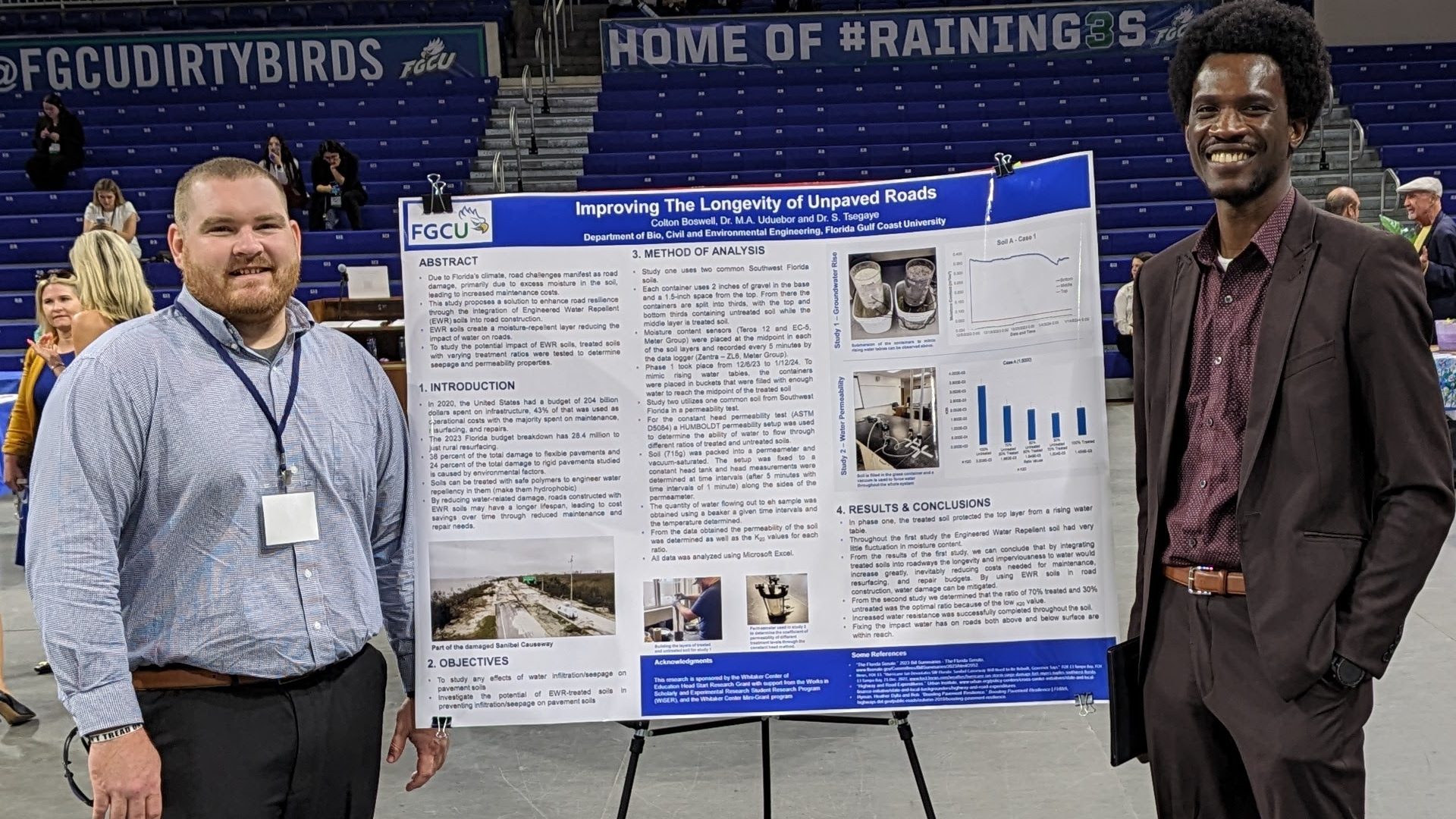
Poster – Improving Longevity of Unpaved Roads – FURC
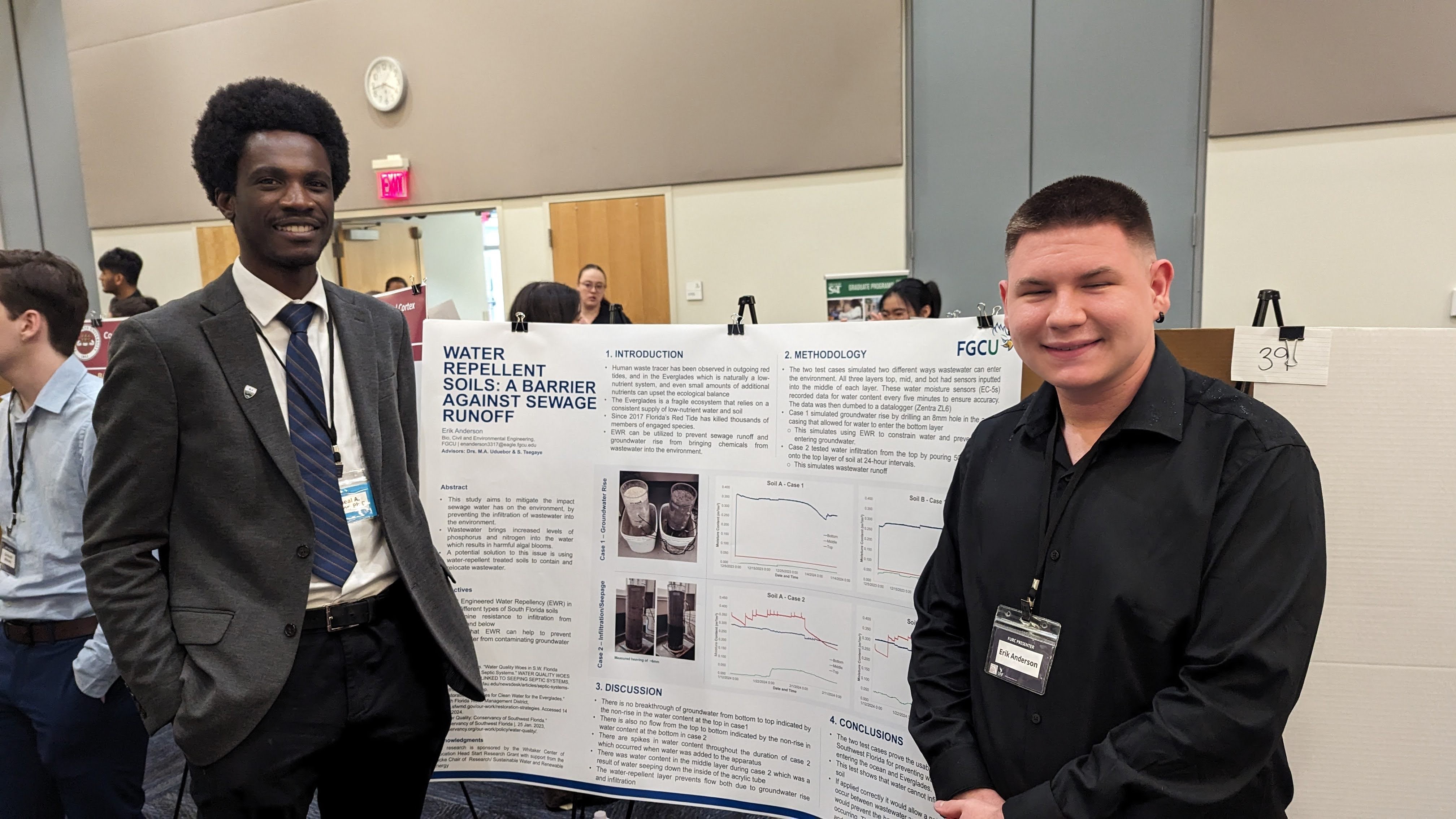
Poster – Water Repellent Soils: A Barrier Against Sewage Runoff – FURC
Poster – Improving Longevity of Unpaved Roads – Eagle X
Poster – Water Repellent Soils: A Barrier Against Sewage Runoff – Eagle X
Awards – WCE Mini-Grant Award (Colton)
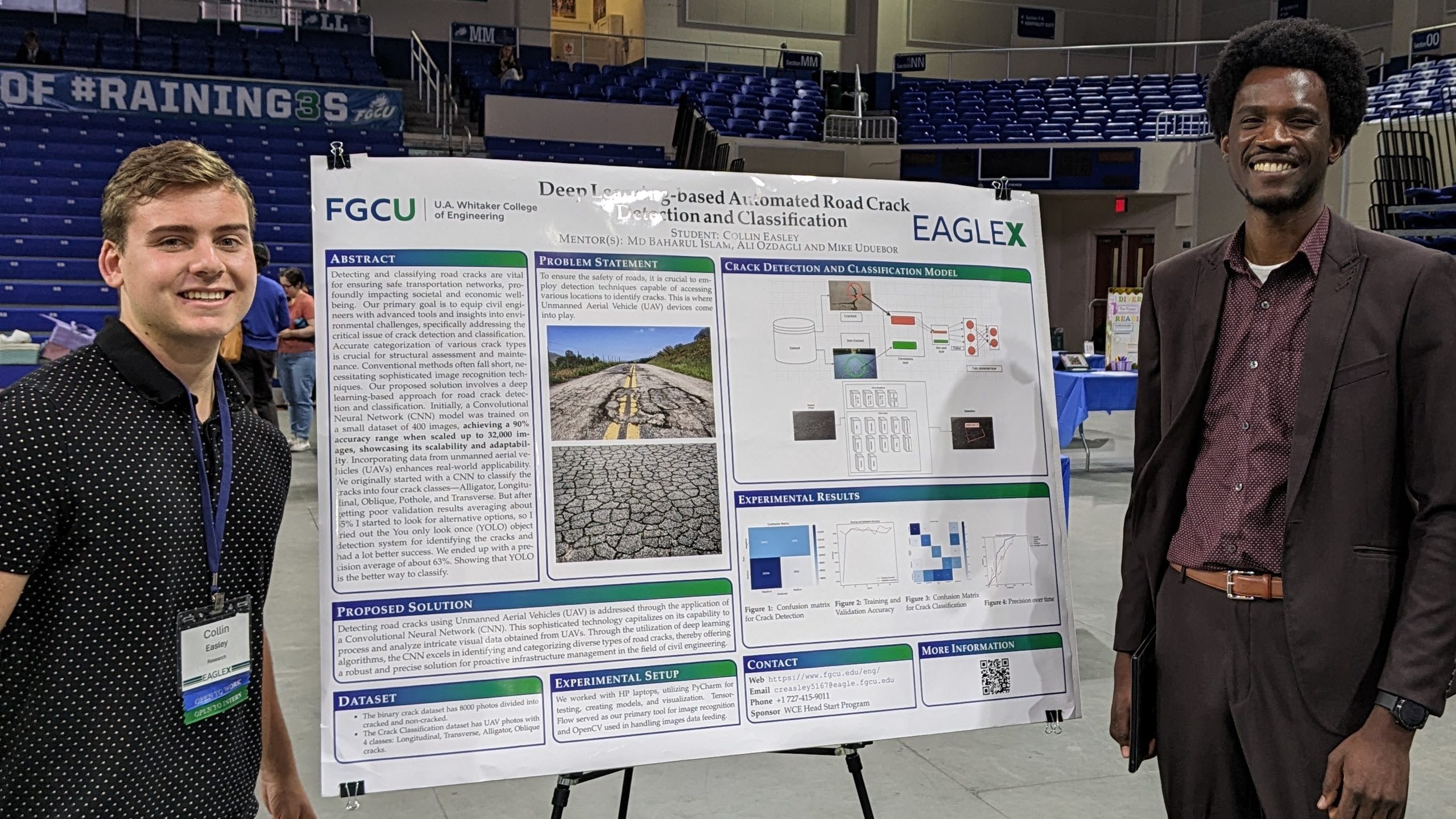
Collin Easley
ML Algorithms for Pavement Condition Assessment
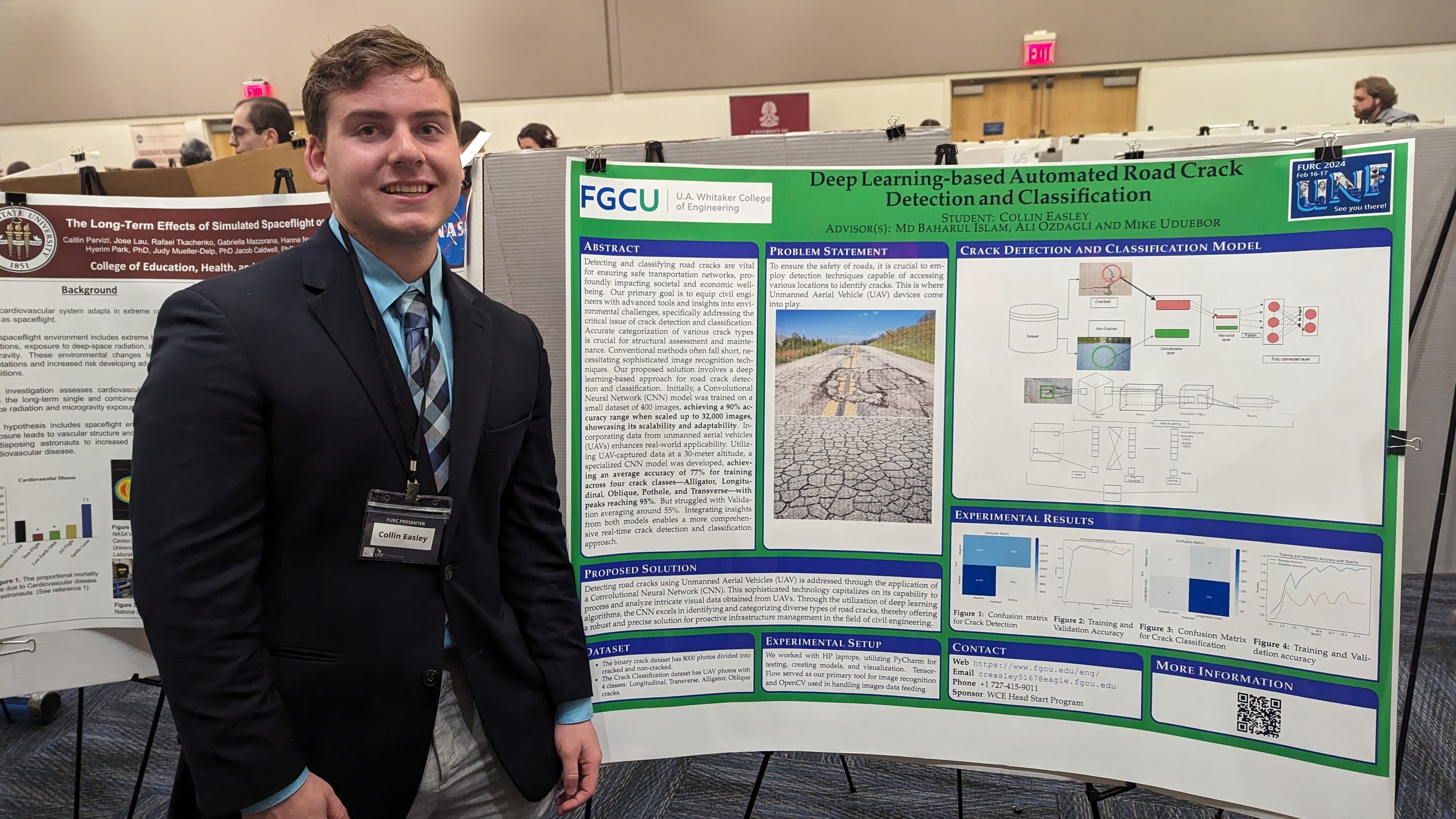
Machine learning algorithms play a crucial role in pavement condition assessment and damage prediction, particularly in the context of the Southwest Florida region. By analyzing a myriad of local environmental factors, such as high temperatures, humidity, and the impact of tropical storms, these algorithms can effectively forecast and evaluate pavement conditions. Through the utilization of historical data specific to the Southwest Florida area, including information on pavement materials, traffic volume, and maintenance schedules, machine learning models can provide valuable insights for proactive maintenance and infrastructure planning. This innovative approach ensures a sustainable and resilient pavement network, tailored to the unique challenges posed by the region’s climate and traffic patterns.
Grants/Support – WCE Head Start Grant
Co-Advisor(s) – Dr. B. Islam, Dr. A. Ozdagli
Maxwell Pettit
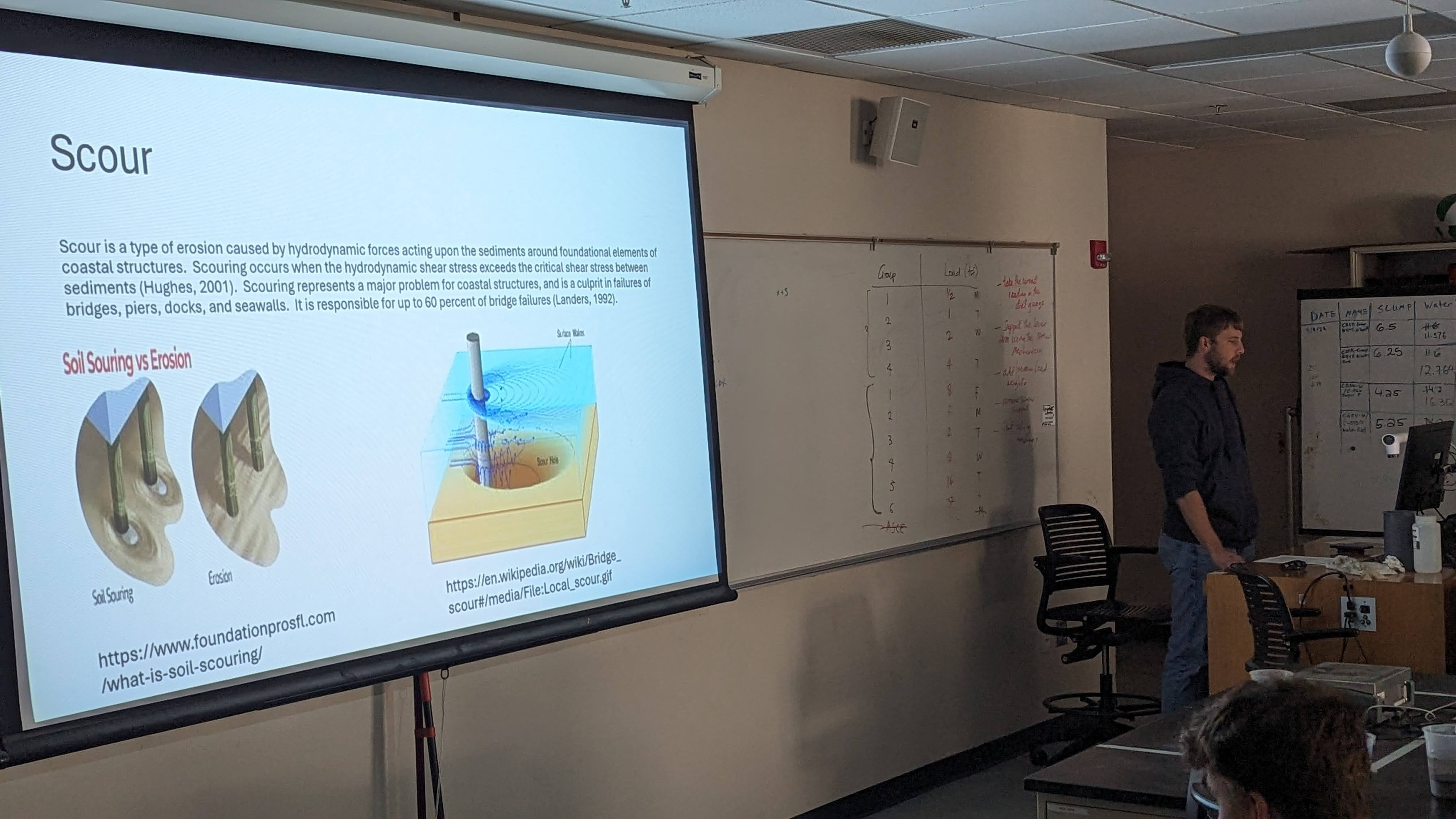
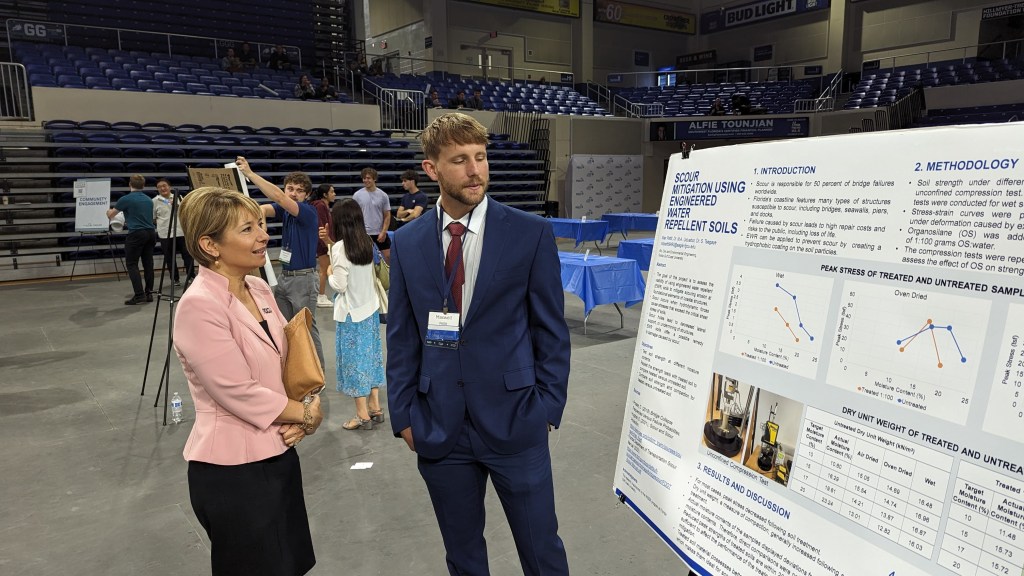
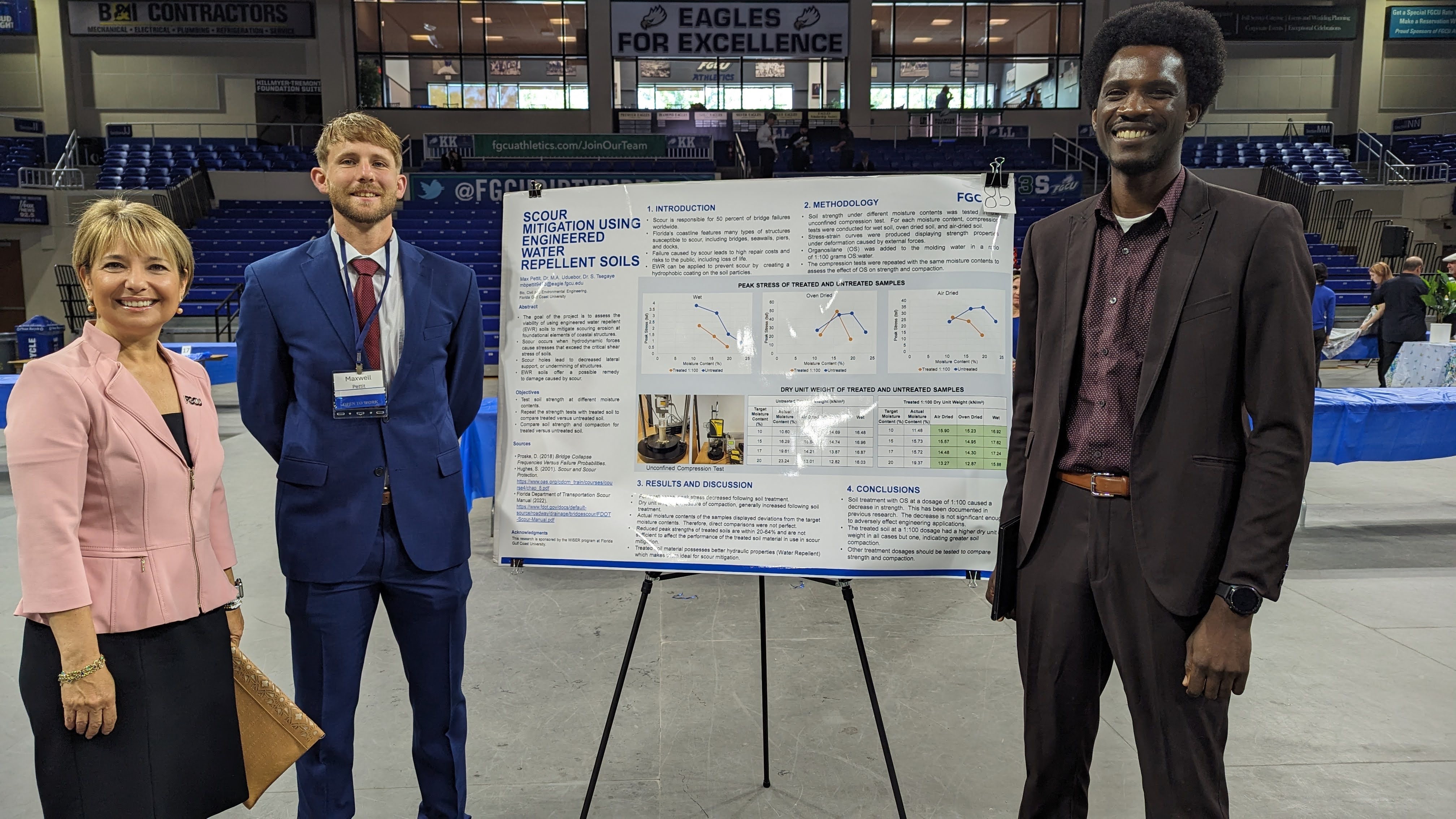
EWR for Scour Mitigation
Engineered water repellency for scour mitigation is crucial for infrastructure resilience in the Southwest Florida region, where the proximity to water bodies makes structures susceptible to erosion. By utilizing advanced hydrophobic coatings and materials, engineers can effectively mitigate the impact of scour, safeguarding bridges, embankments, and other vital infrastructure from erosion caused by water flow and wave action. This innovative approach not only enhances the durability of these structures but also contributes to the overall resilience of the region’s infrastructure in the face of potential water-related challenges.
Grants/Support – WCE Head Start Grant, WiSER
Poster – Scour Mitigation Using Engineered Water Repellent Soils – Eagle X
Awards – Blair Foundation (Summer) Scholarship
Clayton Lynskey
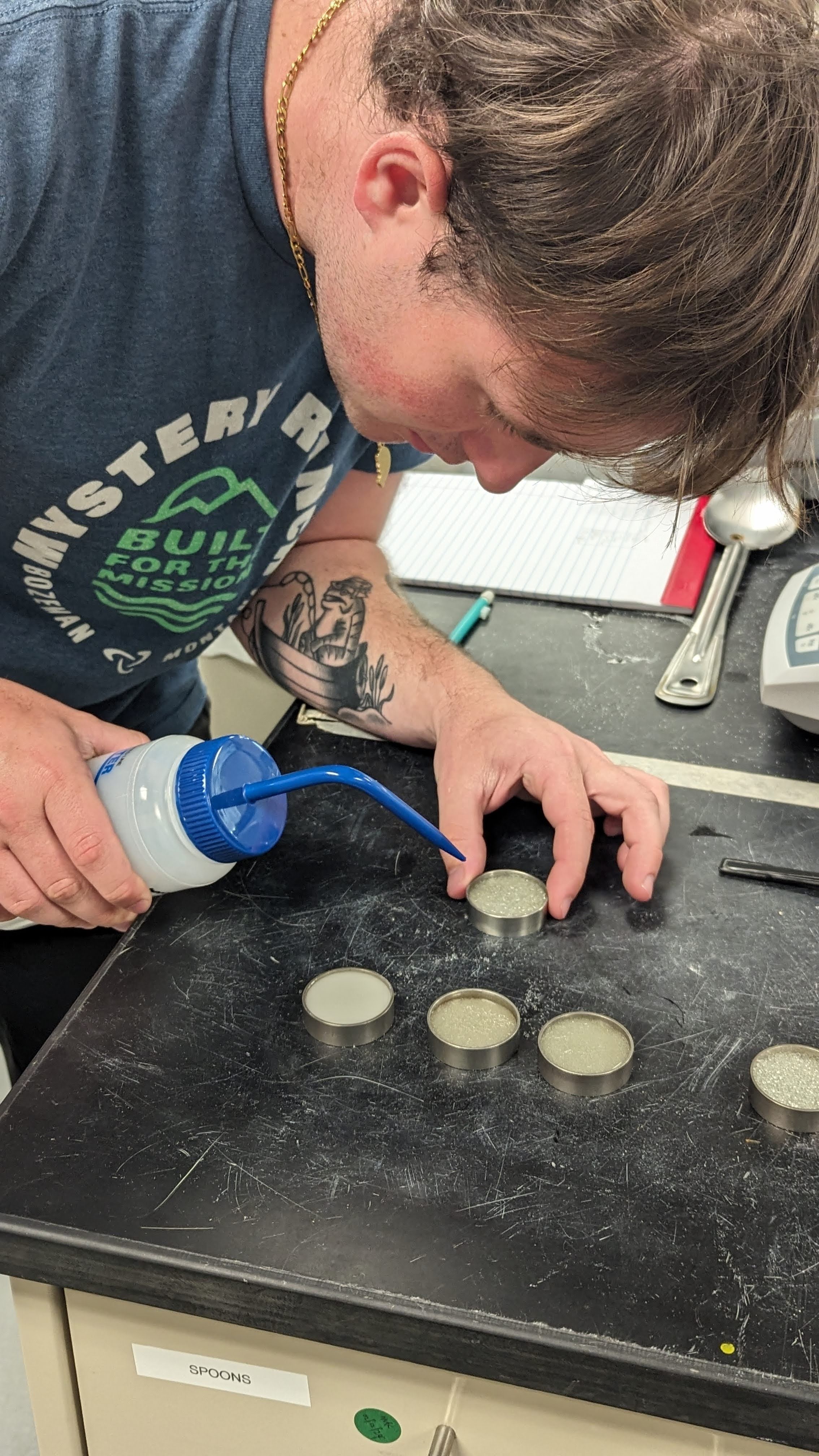
Water Retention Properties of EWR Soils
Determining the water retention properties of water-repellent soils is a crucial aspect of scientific and engineering research. By studying how these soils interact with and repel water, researchers can gain a deeper understanding of their behavior, which has broad applications across various fields.
Grants/Support – WCE Head Start Grant
Vitali Owen
Christopher Diaz
EWR Aggregate Materials in Concrete
Utilizing water repellent aggregate materials presents an innovative opportunity to enhance both the performance of concrete and its hydraulic properties. By integrating these materials into the concrete mix, the resulting structure benefits from increased durability and resistance to water penetration. This advancement not only prolongs the lifespan of the concrete but also mitigates the potential for damage due to moisture infiltration. As the aggregate materials repel water, they contribute to the overall strength and impermeability of the concrete, thus ensuring a more resilient and long-lasting infrastructure.
Grants/Support – WCE Head Start Grant
Noah Hanson
EWR for Soil Expansion Mitigation
Engineered water repellency plays a crucial role in mitigating expansion in swelling soils, especially in areas like Southwest Florida. By introducing water repellent technologies, such as hydrophobic barriers or surface treatments, the potential for soil expansion due to water absorption can be significantly reduced. In a region where swelling soils pose a significant challenge to construction and infrastructure stability, the implementation of engineered water repellency offers a proactive solution to minimize the detrimental effects of soil expansion. This approach not only helps to preserve the structural integrity of buildings and roads but also contributes to the long-term sustainability and resilience of infrastructure in Southwest Florida.
Alaga Begic
EWR for Slope Failure Mitigation
Engineered water repellency plays a crucial role in mitigating slope failure, especially in the Southwest Florida region. By implementing advanced hydrophobic technologies, slopes can be protected against the erosive forces of heavy rainfall and tropical storms, prevalent in this area. These innovative solutions create a barrier that repels water, preventing saturation of the soil and reducing the risk of destabilization. This proactive approach not only safeguards infrastructure and landscapes but also fosters sustainable development in the region, promoting resilience in the face of extreme weather events.
 Uduebor Lab